
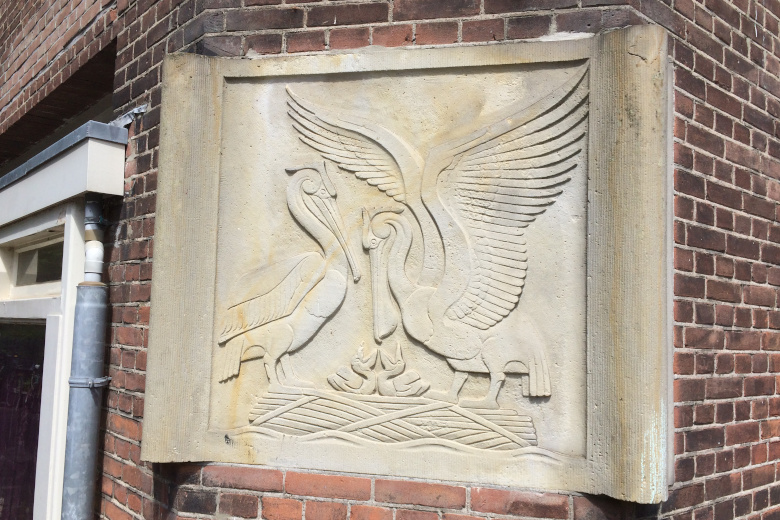
Museum Het Schip has recently added a new artwork by artist Jaap Kaas to its permanent collection. Donated by the Hildo Krop Museum in Steenwijk, the piece is now on display in the Volkshuisvestingzaal.
The artwork is a plaster relief that originally served as a design model for a public sculpture at a housing project in the Landlust neighborhood of Amsterdam’s Bos en Lommer district. In 1935, the Amsterdam municipal art department commissioned three artists to create facing brick designs for a residential block by architect Piet Kramer, located on Haarlemmerweg and Gibraltarstraat. The buildings, constructed in a simplified late Amsterdam School style, were built for the Maatschappij ter Verkrijging van Eigen Woningen, a housing association now known as De Key.
Frits Sieger contributed a brick design featuring a woman nursing a child, with apartment buildings and airplanes in the background. Jan Schultsz designed animal motifs, including a pair of parrots and a pair of squirrels. Jaap Kaas initially created a scene from Greek mythology, 'The Cleansing of the Augean Stables'. However, this design received criticism from the housing association, which questioned its relevance to housing. In response, Kaas created an entirely new design: a gable stone depicting ‘Feeding Pelicans’.
This new sculpture fit naturally within Kaas’s body of work, as he often created animal designs for Artis, the Amsterdam zoo. Explaining his concept, Kaas said he was inspired by the idea of a nest, which evokes feelings of warmth and home. The weaving together of twigs and materials into a strong structure serves as a powerful symbol of building one’s own home. He chose pelicans specifically because, much like housing associations developing homes, these birds build their nests in marshy, watery environments - on the water’s edge or even in the water itself.
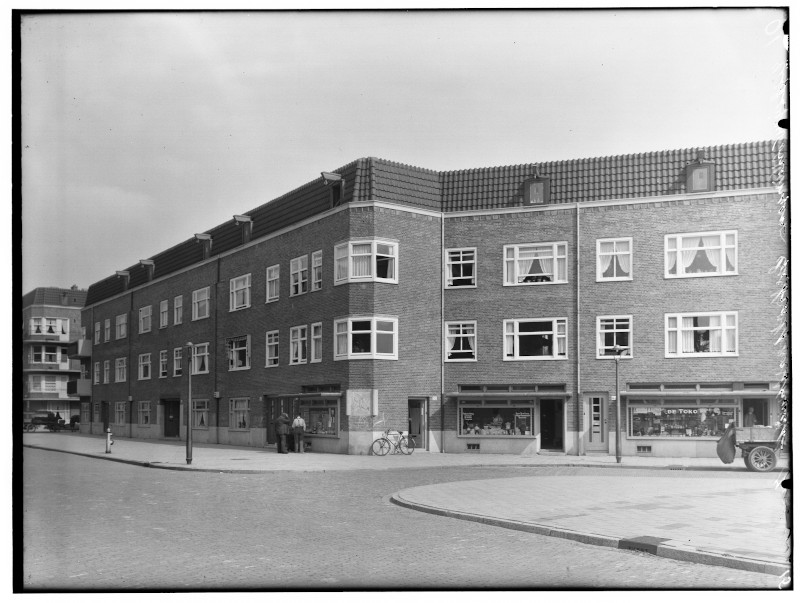
photo: Stadsarchief Amsterdam
With this story, Jaap Kaas managed to inspire the board of the housing association. As a result, the artwork was approved and executed in natural stone in 1936. It was placed in a prominent position on the corner of the small square at Gibraltarstraat and Van Gentstraat.
What happened to the original plaster design after 1936 remains unclear. What we do know is that in 2002, Alice Roegholt, director of Museum Het Schip, visited the former studio of Hildo Krop on the Plantage Muidergracht. During her visit, she photographed many plaster sculptures, among which was the plaster version of Jaap Kaas’s gable stone.
These plaster pieces later became part of the collection at the Hildo Krop Museum in Steenwijk. Since that museum focuses primarily on the work of Hildo Krop, it generously donated the plaster relief by Jaap Kaas to Museum Het Schip last year. The relief now has a fitting and permanent place in our exhibition on the Amsterdam School and the history of public housing.
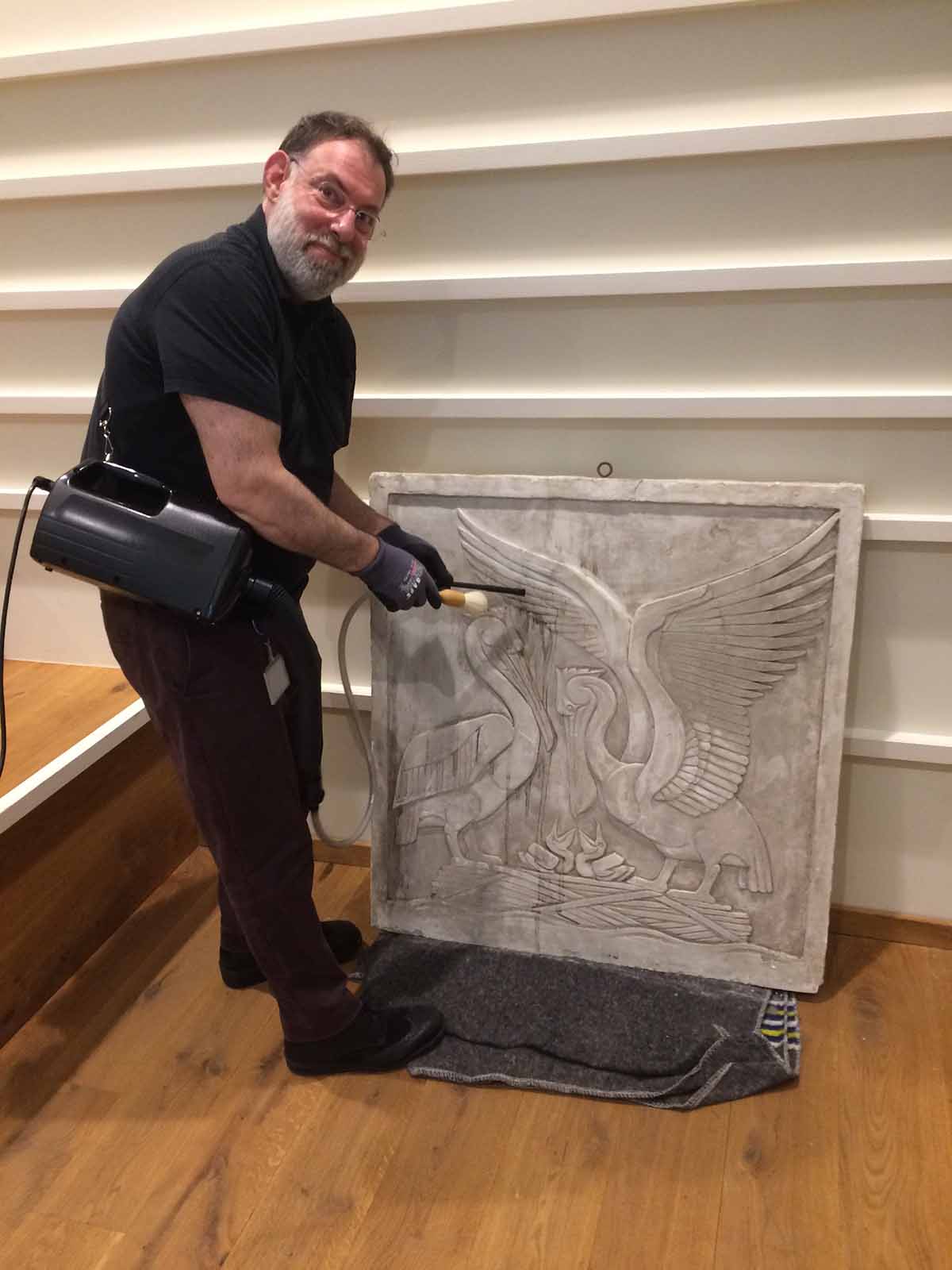
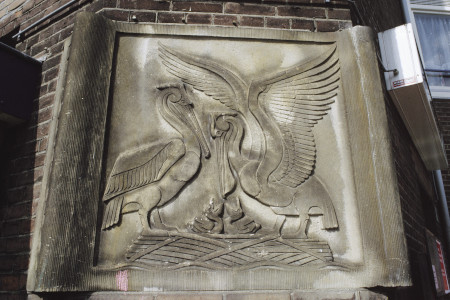
photo on the left: cleaning of the relief in Museum Het Ship May 2020
Yet the question remains: how did a sculpture by Jaap Kaas end up in Hildo Krop’s studio?
One possible explanation is that the sculpture was executed by Krop’s assistants, who were sometimes referred to as “the choppers.” This would not have been unusual, as Krop employed many craftsmen, and they were occasionally commissioned to assist other artists. However, there is no concrete evidence that Krop’s team carried out Kaas’s design.
A more likely explanation is found in Jan Teeuwisse’s 1987 book Life and Work of Sculptor-Draftsman Jaap Kaas. In 1963, Kaas was forced to vacate his studio in the Muiderpoort district to make room for a municipal tax office. He then moved into a much smaller studio, located next to Hildo Krop’s on the Plantage Muidergracht. Due to limited storage space, Kaas destroyed several of his plaster works. The relief of the Feeding Pelicans survived and somehow ended up in Krop’s studio.
Exactly how this transfer happened remains unknown. Did Kaas give it to Krop? Was it simply left behind and taken in? Hildo Krop passed away on August 20, 1970, and Jaap Kaas followed on October 4, 1972.
We may never know the full story. It is a small mystery that still surrounds this unique piece.
With special thanks to the Hildo Krop Museum in Steenwijk.